
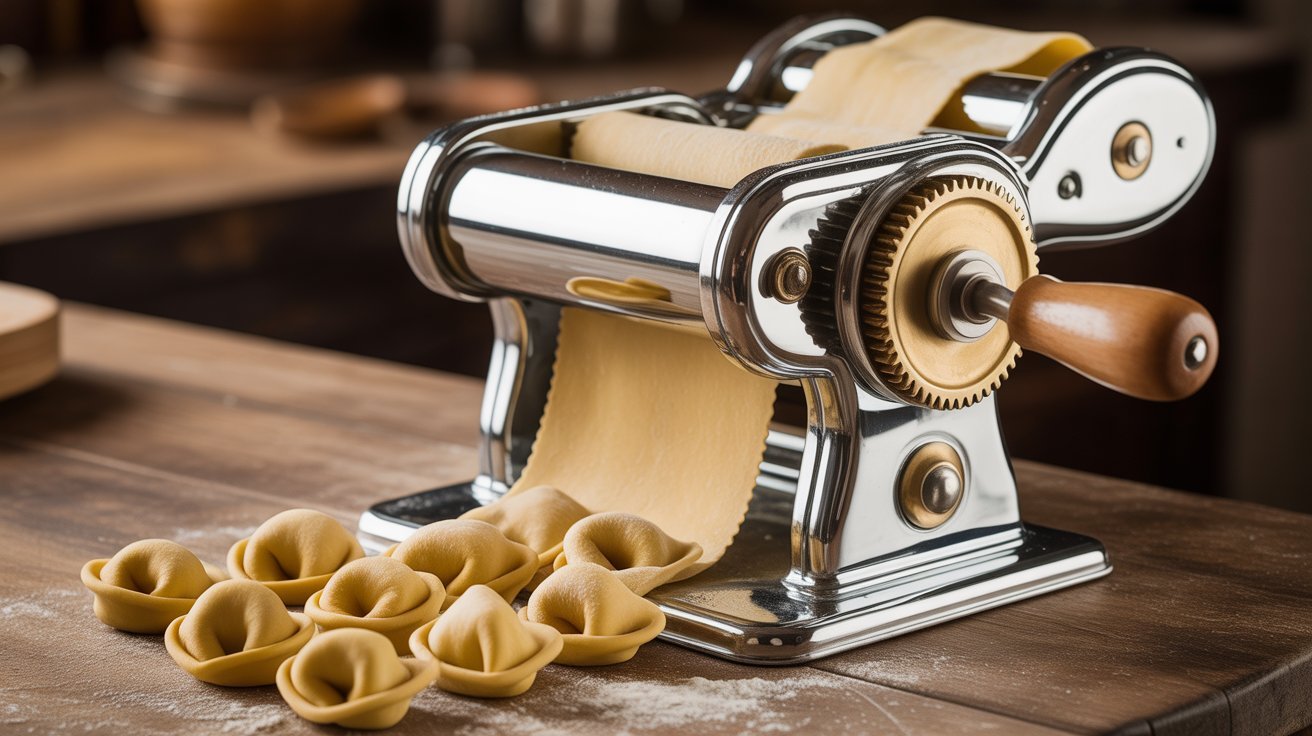
A tortellinatrice is a machine designed to produce tortellini automatically or semi-automatically. It shapes the pasta dough, fills it with stuffing, and forms the traditional tortellini shape with precision.
In simple words, a tortellinatrice does the work that skilled hands used to do, but faster and with consistent results. It does not invent new pasta shapes. Instead, it focuses on producing classic tortellini efficiently.
This machine is widely used in pasta factories, commercial kitchens, and growing food businesses.
Origin of the Tortellinatrice
The tortellinatrice comes from Italy, where pasta making has always been both an art and a profession. Traditionally, tortellini were made by hand, often by families during holidays.
As pasta demand increased in the twentieth century, Italian engineers started designing machines to help pasta makers keep up without losing quality. The tortellinatrice was born from this need.
It represents a balance between tradition and technology.
Why Tortellinatrice Machines Matter
Modern food production requires speed, consistency, and hygiene. Making tortellini by hand is slow and requires skilled labor.
A tortellinatrice matters because it:
-
Saves time
-
Reduces labor costs
-
Produces consistent shapes
-
Meets hygiene standards
-
Supports large scale production
From my observation, food businesses grow only when production becomes reliable. A tortellinatrice provides that reliability.
How a Tortellinatrice Works
The working process of a tortellinatrice is easier to understand than many people think.
First, pasta dough is fed into the machine. The dough is rolled into thin sheets.
Second, filling is added. The filling can be meat, cheese, or vegetable based.
Third, the machine folds and shapes the dough into tortellini.
Finally, the finished tortellini are cut and released, ready for cooking or packaging.
Everything happens smoothly and continuously.
Main Components of a Tortellinatrice
A tortellinatrice usually includes several important parts.
Dough Feeding System
This part controls how the pasta dough enters the machine.
Filling Injector
This system ensures even distribution of filling.
Forming Molds
These molds shape the tortellini.
Cutting Mechanism
This separates each tortellino cleanly.
Control Panel
This allows operators to adjust settings.
Each component plays a vital role.
READ ALSO: Goonierne 2
Types of Tortellinatrice Machines
There are different types of tortellinatrice machines based on usage.
Manual Tortellinatrice
Requires operator control and is suitable for small kitchens.
Semi Automatic Tortellinatrice
Balances automation and flexibility.
Fully Automatic Tortellinatrice
Designed for large scale production.
Choosing the right type depends on business size.
Industrial Tortellinatrice Explained
Industrial tortellinatrice machines are used in factories. They operate continuously and can produce thousands of tortellini per hour.
These machines are built with stainless steel for hygiene and durability. They integrate with other pasta processing equipment.
From a business perspective, industrial tortellinatrice machines are an investment, not an expense.
Tortellinatrice for Small Businesses
Small restaurants and pasta shops also use tortellinatrice machines. These models are compact and easier to operate.
They allow small businesses to maintain handmade quality while increasing output.
I have seen small pasta shops grow rapidly after investing in a basic tortellinatrice.
Quality of Pasta Produced
Many people worry that machine made pasta lacks soul. In reality, quality depends on ingredients and settings, not just hands.
A tortellinatrice produces uniform tortellini that cook evenly. Consistency improves customer satisfaction.
The machine does not replace recipe creativity. It supports it.
Efficiency and Productivity
One of the biggest advantages of a tortellinatrice is efficiency.
Manual production may create hundreds of tortellini per hour. A machine can produce thousands.
This difference allows businesses to meet demand without compromising quality.
Real World Use Cases
Pasta Factories
Large scale tortellini production.
Restaurants
Fresh pasta preparation.
Catering Businesses
Bulk orders for events.
Food Export Companies
Standardized pasta products.
These examples show how versatile the machine is.
Practical Examples
Imagine a small Italian restaurant making fresh tortellini daily. Without a tortellinatrice, staff spend hours folding pasta.
With a machine, that time is reduced, allowing chefs to focus on sauces and flavors.
This practical improvement directly increases profitability.
Personal Experience and Opinion
From my experience observing food businesses, automation does not kill tradition. Poor implementation does.
A tortellinatrice used with care enhances quality and consistency. It supports skilled chefs rather than replacing them.
I believe machines like this preserve tradition by making it sustainable.
Tortellinatrice vs Handmade Tortellini
Handmade tortellini are beautiful and symbolic. However, they are not practical for large volumes.
A tortellinatrice provides:
-
Consistency
-
Speed
-
Scalability
Handmade methods remain valuable for artisan production.
Benefits of Using a Tortellinatrice
-
High production capacity
-
Uniform pasta shape
-
Reduced labor effort
-
Improved hygiene
-
Business scalability
These benefits explain why the machine is widely adopted.
Limitations and Challenges
No machine is perfect.
A tortellinatrice requires:
-
Initial investment
-
Regular maintenance
-
Skilled setup
Ignoring maintenance can reduce quality.
Honesty about limitations builds trust.
Maintenance and Reliability
Cleaning is essential. Pasta machines must meet food safety standards.
Regular inspection and proper cleaning ensure long machine life.
From a reliability standpoint, maintenance is not optional.
EEAT Perspective
Expertise comes from understanding food production. Experience comes from real kitchens. Trust comes from transparency.
This article does not exaggerate the role of a tortellinatrice. It explains its real value.
That approach aligns with EEAT principles.
Future of Tortellinatrice Machines
The future of tortellinatrice machines includes smarter controls, better hygiene design, and energy efficiency.
Technology will continue supporting food tradition rather than replacing it.
Conclusion
A tortellinatrice is more than a pasta machine. It is a bridge between tradition and modern production.
It helps businesses grow while respecting Italian culinary heritage.
Understanding the tortellinatrice allows pasta makers to make informed decisions and produce high quality tortellini consistently.
Frequently Asked Questions
What is a tortellinatrice
It is a machine used to produce tortellini automatically or semi automatically.
Is tortellinatrice pasta high quality
Yes, when good ingredients and correct settings are used.
Who should use a tortellinatrice
Restaurants, pasta factories, and food businesses.
Is a tortellinatrice expensive
Prices vary based on size and automation level.
Does a tortellinatrice replace chefs
No, it supports chefs by saving time and effort.